"I bet the gossip here is on an epic level"
Tristan da Cunha: Life on the World’s Most Remote Inhabited Island
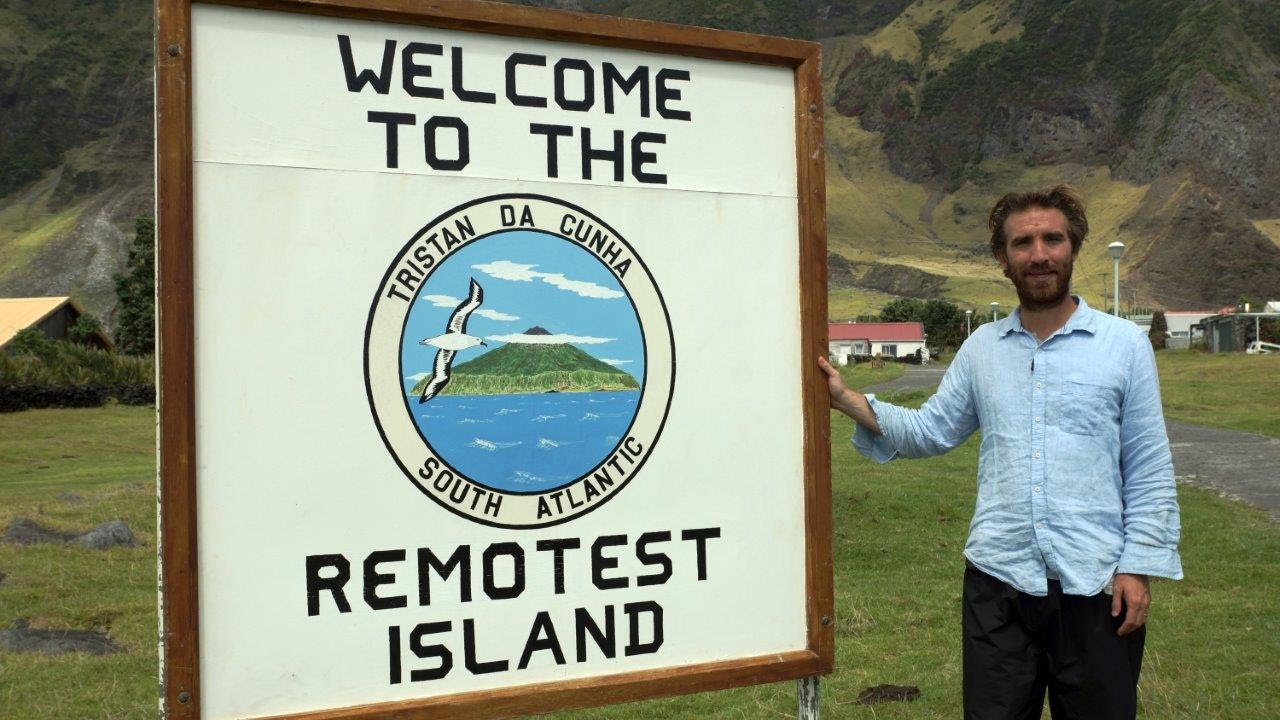
Deep in the center of the South Atlantic Ocean, thrust up from the ocean floor over a geological hot spot in the Earth's mantle, sits Tristan da Cunha. Located roughly 2,500 kilometers (about 1,500 miles) west of Cape Town, South Africa, it holds the official, undisputed title of the most remote inhabited island on the planet. There is no airport here. There is no quick weekend getaway. Reaching this isolated British Overseas Territory requires an arduous, three-week journey by boat across some of the roughest and most unforgiving waters in the world.
The Settlement: Edinburgh of the Seven Seas
Despite the imposing, volcanic landscape rising over 2,000 meters above sea level, Tristan da Cunha is home to a permanent, fully functional settlement named Edinburgh of the Seven Seas (The settlement on Tristan da Cunha was named "Edinburgh of the Seven Seas" in honor of Prince Alfred, the Duke of Edinburgh. He was the second son of Queen Victoria, and the village was named after him following his visit to the island in 1867). Currently, just 270 people live in this tiny, self-contained village.
Life here operates on a fundamentally different frequency than the rest of the modern world. According to lifelong resident Harold Green, the community functions as one massive extended family. The local economy and daily survival rely heavily on communal cooperation, subsistence farming, and fishing. Just down the island's single paved road lie the "potato patches," a communal agricultural area where families manage several fields to grow essential vegetables. Livestock, including cows, sheep, ducks, and chickens, are strictly controlled to prevent overgrazing on the island's incredibly limited pasture.
It is a place of profound safety and mutual trust. Residents regularly leave their doors unlocked and windows wide open, relying on a deeply ingrained social contract built over generations of shared isolation.
The 1961 Eruption: A Close Call
However, the island's serene existence is occasionally interrupted by the sheer geological violence of its origins. The entire island is essentially the tip of an active volcano. In October 1961, the earth began to violently shake, and lava erupted onto the coastal plain, stopping just tens of meters short of completely destroying the village.
With absolutely nowhere to retreat on the island, the entire population was forced to evacuate. After a brief stop in Cape Town, they were relocated to England. For many, this was a massive cultural shock—it was the first time residents had ever ridden in a car or coach, having relied entirely on donkeys back home. Despite the modern comforts of mid-century Britain, the Islanders unanimously chose to return to Tristan da Cunha 18 months later, drawn back by the unmatched peace and quiet of their ancestral home. As Green poetically noted about the island's absolute silence, "it's so quiet sometimes you hear the grass grow."
The Community Reacts: The Reality of Extreme Isolation
While the idea of escaping to a remote island paradise sounds incredibly romantic to burnt-out city dwellers, the internet was quick to point out the unique societal quirks of living in a 270-person village. These five curated community comments perfectly capture the humorous reality of ultimate isolation:
The Social Dynamics: Hero commenter @towerclimber7277 astutely observed, "I bet the gossip here is on an epic level". When you share a single road, a single farm, and a single boat schedule with exactly 269 other people, keeping a secret is likely the hardest challenge on the island.
The Irony of Safety: Responding to the documentary's claim about widespread trust and unlocked doors, Hero commenter @fern_4real pointed out a hilarious visual contradiction in the footage: '"There are no locks here" dude trys to open a LOCKED market.'
The Unspoiled Nature: Moving away from the humor, Best commenter @sindhuchandran1 highlighted the profound natural beauty of the location: "Imagine their sky in the night". Sitting thousands of miles away from any major source of light pollution or smog, the stargazing opportunities in the middle of the South Atlantic would be genuinely peerless.
The Genetic Reality: Touching on Harold Green's quote about the village acting as brothers and sisters, Best commenter @michaelsalyers5175 joked, '"It's one big family" that's probably literally true.' Given that the island's entire population historically traces back to just a handful of original founders, the family tree is more of a tight wreath.
The Romantic Drought: Building directly on that demographic reality, Best commenter @MetalFan10101 bluntly summarized the most pressing issue for young adults on the island: "The dating game is rough over here".
The Ultimate Escape
In a hyper-connected, relentlessly loud 21st century, Tristan da Cunha stands as a fascinating monument to human resilience and the desire for peace. The islanders don't stay because they are trapped; as their historical 1961 evacuation to England proved, they actively choose the quiet. It is a community built on radical self-reliance, communal trust, and an enduring respect for the incredibly volatile, beautiful patch of volcanic rock they call home.
Do you find this post helpful?