Snake Learns To Use Exo-Skeleton

"We did it, folks. We invented the lizard"

@salvadormadrigal98123y ago
112.5k

Snake Learns To Use Exo-Skeleton

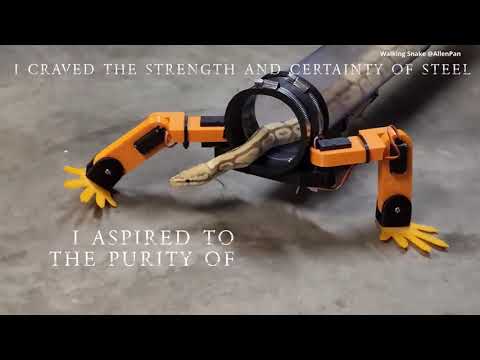
In a wildly outlandish but thoroughly entertaining feat of engineering, YouTuber Allen Pan decided it was time to right a prehistoric evolutionary wrong. By constructing a custom, four-legged robotic exoskeleton, he successfully returned limbs to a species that had lost them tens of millions of years ago. (You can check out the original experiment by Allen Pan here).

The setup itself is a marvel of DIY robotics: a clear plastic tube outfitted with wirelessly controlled servos, programmed to mimic the walking gait of a four-legged lizard. What catapulted this fascinating experiment into top-tier meme territory, however, was a fan edit that laid a notoriously grim audio track over the footage.

The Purity of the Blessed Machine

The viral clip borrows the chilling introductory monologue from the video game trailer of Warhammer 40,000: Mechanicus. As the python casually scoots across the room in its new rig, a heavy, cybernetic voice declares, "From the moment I understood the weakness of my flesh, it disgusted me."

The comedy is driven entirely by the severe juxtaposition of high-stakes, sci-fi fanaticism and a mildly curious reptile. Curated commenter @Profile__1 zeroed in on this audiovisual dissonance, noting, "I find it really funny how insidious and evil the voice sounds, but then the snake itself looks so confused and a little concerned."

A Willing Participant in Cybernetics

Despite looking slightly bewildered, the animal's behavior suggests it didn't mind the cyborg life at all. Because the tube is completely open-ended without any restraints, the python's participation sparked some brilliant philosophical takes from the internet.

Top hero commenter @Roasty_my_toasty leaned heavily into the Warhammer lore to explain the phenomenon, pointing out that "The snake can leave at any time. It chooses the certainty of metal". This sentiment was echoed by @oxyoxyloged1311, who observed the creature's remarkably calm demeanor: "I love how the snake is totally into it. This is not a confused animal, it realises it just got an upgrade."

Naturally, the gaming community couldn't let the moment pass without dropping the perfect pun, with @emithefreak6631 declaring the mechanized reptile a true "Solid Snake".

Accidental De-Evolution

For all the dark, techno-religious posturing of the edit and the genuine mechanical ingenuity of the original build, the grand finale of this experiment is heavily ironic. By spending countless hours engineering a state-of-the-art robotic suit to give a snake back its legs, humanity basically just worked backward. As hero commenter @salvadormadrigal9812 so eloquently summarized the entire endeavor: "We did it, folks. We invented the lizard".

Do you find this post helpful?

2 people found this post funny
insightful: 1
Comments:
Hackerman Hacks Time

"My software turned into hardware after watching this"

@jerryjacobsunny55747y ago
6.9k

Hackerman Hacks Time

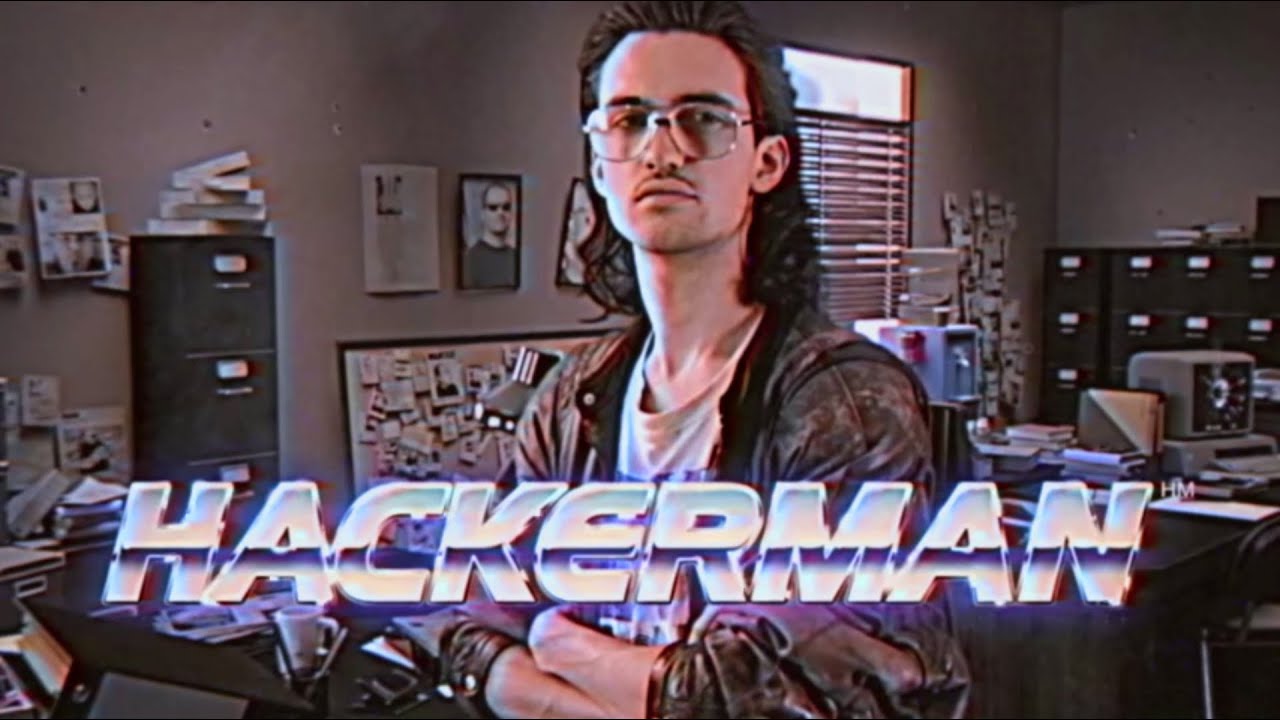
The "Hackerman" sequence from David Sandberg’s 2015 Kickstarter-funded phenomenon, Kung Fury, is a glorious masterclass in aesthetic overload. Set to a pulsing, retro synthwave soundtrack, the viral scene features Leopold Nilsson as the ultimate 1980s stereotype. Donning mirrored sunglasses and furiously typing nonsense on a wall of glowing CRT monitors, his goal is delightfully absurd: to literally "hack time".

By treating temporal displacement as a mere firmware issue solvable with a Nintendo Power Glove, the film lovingly parodies every cliché "hacker" scene from cheesy action cinema.

System Requirements for Time Travel

The internet's enduring love for this clip stems from its deadpan delivery of nonsensical tech-babble. Instead of relying on quantum physics, Hackerman strictly relies on legacy system architecture. User @Rastek19 highlighted the video's most iconic hardware flex, quoting the line, "First of all, you need a lot of RAM At least 256 Kilobytes".

That specific retro-hardware limitation triggered a wave of nostalgic panic in the comments, with @TheMarcodiator perfectly capturing the era's computing struggles by replying, "256 kilobytes? ARE YOU CRAZY? WHERE THE HELL AM I GOING TO FIND ALL THAT RAM?".

Over-Engineering an Alpha State

The sheer alpha-energy of hacking the timeline with a mechanical keyboard and matrix-style scrolling text prompted our top hero commenter, @jerryjacobsunny5574, to drop the legendary observation: "My software turned into hardware after watching this".

Meanwhile, others appreciated the highly literal, real-world execution of the script. Fellow hero commenter @robertbick986 pointed out the video's undeniable effectiveness, joking, "Watching this video transported me almost 4 minutes into THE FUTURE".

The Missing Dependency

Despite the successful compilation of the time hack, the tutorial leaves viewers with a critical, unresolved syntax error. As curated commenter @PaintHuffer1209 astutely noted, "'Where did Hackerman go?' is the biggest unanswered cliffhanger ever". Whether his code trapped him in the mainframe or successfully deployed him across the timeline, Hackerman remains the patron saint of over-engineered, logic-defying programming.

Do you find this post helpful?

2 people found this post funny
Comments:
When Gamers Realize RTX 5090's Reality

""The more GPU you buy, the shinier my jacket gets" -Uncle Jensen, Circa 2025"

@XtencoHS1y ago
48.1k

When Gamers Realize RTX 5090's Reality

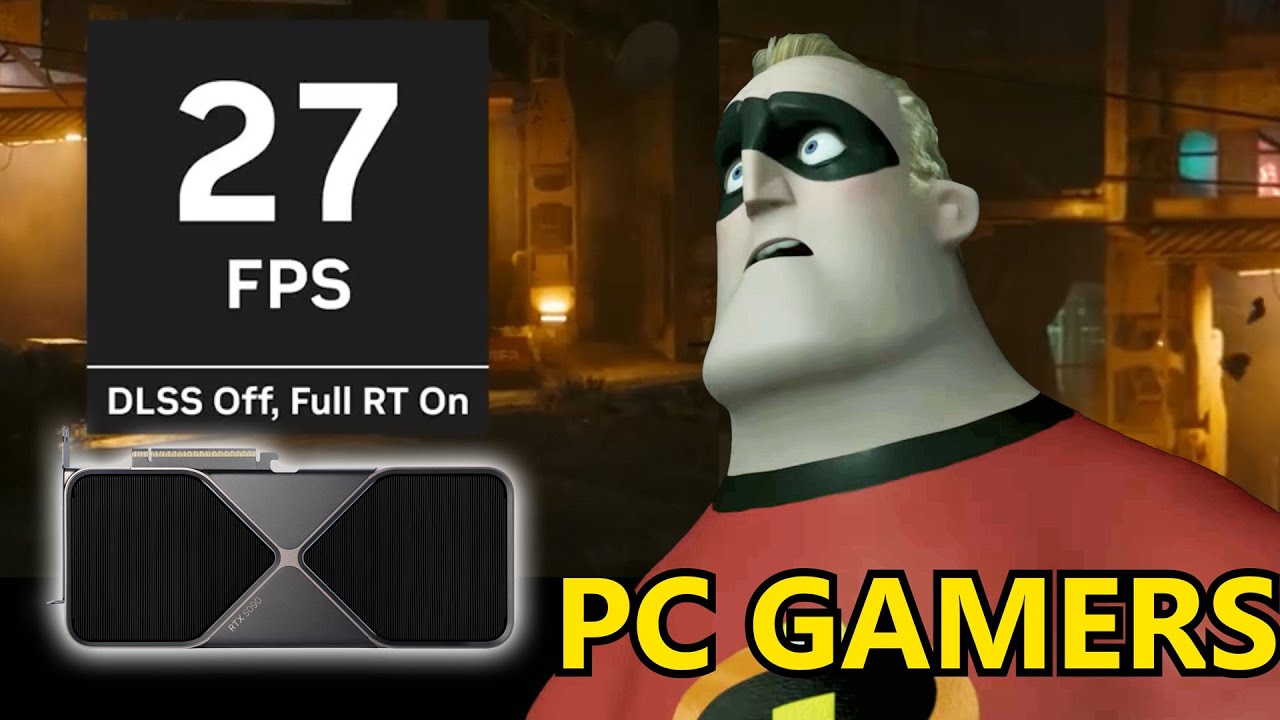
The anticipation surrounding the RTX 50-series launch was nothing short of electric, but the aftermath has left the PC building community in a state of cynical disbelief. When Nvidia CEO Jensen Huang took the stage, the RTX 5090 was touted as a colossal leap forward that would supposedly double the performance of its predecessor. However, the internet is undefeated when it comes to reading the fine print.

A viral meme perfectly captures the gaming community's collective realization that the marketing numbers aren't what they seem. Utilizing the iconic "Kronos database" scene from Pixar's The Incredibles —where a horrified Mr. Incredible discovers a grim truth on a glowing computer terminal—the edit brilliantly swaps out the movie's plot for Nvidia's actual benchmark disclosures. As Bob Parr stares at the monitor in despair, the reality sets in: the promised "generational leap" relies almost entirely on software illusion rather than raw silicon power.

The Generational Tax: 3090 vs. 4090 vs. 5090

To understand why the community is so frustrated by the screen's revelation, you have to look at the historical price-to-performance ratio. For years, PC builders accepted price hikes because they were accompanied by massive leaps in raw, brute-force hardware processing (rasterization).

With the 5090, that social contract has been severely fractured. The card demands a massive $400 price hike over the 4090, yet offers a highly diminishing return in actual hardware capability:

Graphics Card

Launch Year

Launch MSRP

Estimated Raw Hardware Uplift

Primary Marketing Driver

RTX 3090

2020

$1,499

Massive generational rasterization leap

DLSS 2 (Upscaling)

RTX 4090

2022

$1,599

~60-70% raw uplift over 3090

DLSS 3 (Frame Generation)

RTX 5090

2025

$1,999

~30% raw uplift over 4090

DLSS 4 ("Fake Frames")

Source data: Derived from Nvidia's official benchmark disclosures and historical MSRPs.

When stripped of DLSS 4 (Deep Learning Super Sampling) frame generation, the native performance uplift paints a sobering picture. Gamers are furious because they feel they are paying a $1,999 premium for a software algorithm rather than a true, foundational silicon upgrade.

The Optimization Crisis and the "Frames Generating Unit"

This over-reliance on artificial intelligence to generate frames—rather than pushing raw graphical horsepower—struck a serious nerve. Hero commenter @nathanmate8 perfectly renamed modern hardware architecture, declaring the new card a "Graphics Processing Unit ❌ Frames Generating Unit ✅".

The frustration extends far beyond Nvidia's pricing model; it highlights a massive, ongoing crisis within modern game development. Instead of writing efficient code, studios are relying on Nvidia's AI upscaling as a crutch to make poorly optimized games playable. @StephenRoseDuo simply pleaded, "Can we just start optimizing games again please?", a sentiment deeply expanded upon by @ignis2638: "We really have reached a point where our games are such unoptimized messes we need an AI to do the between frames. We really have messed up."

The Leather Jacket Paradigm

The meme closes with a pointed jab at Nvidia's marketing playbook, echoing Huang's infamous "the more you buy, the more you save" mantra. The community was quick to translate this corporate speak. Hero commenter @XtencoHS offered a highly accurate rewrite of the keynote: "The more GPU you buy, the shinier my jacket gets -Uncle Jensen, Circa 2025".

Ultimately, this strategy of using software tricks to dress up modest hardware gains has convinced veteran gamers to hold onto their legacy builds. As @christo3058 hilariously noted about their ancient, hard-working rig: "My watercooled GTX1080: 'Can I go now?' Not this year my friend, not this year..."

Do you find this post helpful?

Comments:
Space Satire: Darth Vader vs. The Surveillance State

""I find this council's lack of faith disturbing.""

@ManChan-w5p18d ago
18.7k

Space Satire: Darth Vader vs. The Surveillance State

This deeply surreal clip captures a citizen addressing a city council meeting while fully cosplaying as Darth Vader, the iconic antagonist of the Star Wars franchise. The subject of the meeting is the implementation of Flock Safety cameras—a highly controversial mass surveillance technology. Rather than delivering a standard, impassioned plea for civil liberties, the speaker employs a brilliant, high-effort routine of reverse psychology. Speaking entirely in character, he aggressively advocates for the cameras, arguing that the "Emperor" needs this technology to track "rebel scum," stalk former partners, and fill detention centers with free prison labor. The absolute deadpan commitment to the bit perfectly highlights the dystopian reality of constant civic surveillance, making the council's actual political double-speak sound utterly absurd by comparison.

The Community Reacts: The Dark Side of Local Politics

The internet immediately recognized the brilliance of using extreme theatrical villainy to expose actual government overreach. Filtering through the political commentary, these curated comments perfectly deconstruct why the satirical performance was so highly effective:

  • The Honest Sith: Hero commenter @Nafebutuoy39 pointed out the tragic irony of the performance: "The worst part is he's being more genuine than the politicians". By openly embracing the villainous potential of the technology, the cosplayer strips away the polished, bureaucratic PR language usually used to sell mass surveillance to the public.

  • The Cinematic Callback: Hero commenter @ManChan-w5p perfectly adapted the Sith Lord's one of the most famous movie quote to fit the municipal setting: "I find this council's lack of faith disturbing.". It masterfully bridges the gap between a high-stakes space opera and the incredibly dry reality of local government proceedings.

  • The Tactical Approach: Selected commenter @kingbenjithegreat6195 appreciated the underlying rhetorical strategy: "The reverse psychology is genuinely genius". Instead of getting angry and being dismissed as a crank, the speaker forces the council to listen to a mirror reflection of their own policies taken to their logical, terrifying extreme.

  • The Wardrobe Technicality: Selected commenter @Steve-id5qx delivered a classic internet compliment with a twist: "Not all heroes wear capes, but this one does.". It playfully acknowledges that while Vader is universally recognized as a symbol of evil, the citizen beneath the helmet is performing a vital civic duty.

  • The Ultimate Medium: Selected commenter @AlexanderMastrian summarized the power of the performance: "Sometimes satire is the best critique.". It proves that political theater, when executed with enough commitment and absurdity, can cut through bureaucratic noise far more effectively than traditional debate.

The Technology of the Empire: How ALPR Networks Operate

To fully understand why this satirical performance resonated so deeply online, one must look at the actual mechanics of the technology being debated. Flock Safety cameras are a modern iteration of Automated License Plate Readers (ALPR). Unlike traditional traffic cameras that only trigger during a speeding violation, ALPR systems act as an always-on dragnet. They utilize advanced optical character recognition (OCR) and machine learning algorithms to capture and catalog every single passing vehicle, recording the license plate, vehicle make, model, color, and precise timestamp.

The speaker's hyperbolic joke about tracking "rebel scum from playground to playground" touches on a very real, documented privacy concern. Because these camera networks are often interconnected across multiple municipalities and states, they create a centralized, searchable database of civilian movement. When deployed in high densities, these systems allow operators to retroactively map a citizen's daily routine—from their workplace to their doctor's office, to their place of worship—without requiring a traditional judicial warrant.

Furthermore, the cosplayer's specific, unsettling joke about needing the cameras to "stalk my ex-girlfriend" highlights the most critical flaw in mass surveillance architecture: the human element. The centralized databases that house ALPR data have historically been vulnerable to abuse, where individuals with administrative access have utilized municipal technology for personal vendettas or unauthorized tracking. By dressing as a literal space fascist to demand more cameras, the speaker masterfully exposes the inherent dangers of building a turnkey surveillance apparatus. He essentially forces the local government to reckon with the fact that once the infrastructure for absolute control is installed, it is only one bad administration away from becoming an actual empire.

Do you find this post helpful?

Comments:
Germany vs Brazil (7-1) 2014 FIFA World Cup

"Imagine going to the bathroom at 20' and returning 10 minutes later to see the score go from 0-1 to 0-5"

@pedromendes68465y ago
27.8k

Germany vs Brazil (7-1) 2014 FIFA World Cup

Who can forget the surreal 7-1 rout of host nation Brazil by Germany in the 2014 FIFA World Cup semifinal? Dubbed the Mineiraço (translating roughly to "The Agony of Mineirão," a term combining the name of the stadium with a Portuguese suffix denoting a massive disaster), it remains the most shocking margin of victory in a FIFA World Cup semi-final. But what truly cemented this match into the cultural zeitgeist wasn't just the final score—it was the impossible speed at which Brazil's defense completely collapsed on the world stage.

The 6-Minute Blur: From 0-1 to 0-5

The defining narrative of this match is perfectly captured by a viral realization from hero commenter @pedromendes6846, who painted the most painfully relatable picture for any sports fan: "Imagine going to the bathroom at 20' and returning 10 minutes later to see the score go from 0-1 to 0-5".

This isn't an exaggeration; it is a literal reflection of the match timeline. Germany dismantled the hosts with a ruthless efficiency that left fans and commentators in a state of absolute shock. Toni Kroos famously scored his two goals just 69 seconds apart, turning a highly anticipated clash of titans into a historic rout before the half-hour mark:

Match Minute

Goalscorer

Current Score

Historical Significance

11'

Thomas Müller

0-1 (GER)

Unmarked side-footed volley from a corner.

23'

Miroslav Klose

0-2 (GER)

Broke the all-time World Cup scoring record (16 goals).

24'

Toni Kroos

0-3 (GER)

Left-footed strike from the edge of the area.

26'

Toni Kroos

0-4 (GER)

Scored a mere 69 seconds after his previous goal.

29'

Sami Khedira

0-5 (GER)

Capped off the devastating four-goal, six-minute blitz.

69'

André Schürrle

0-6 (GER)

Side-footed finish from close range.

79'

André Schürrle

0-7 (GER)

Powerful strike that earned a standing ovation from home fans.

90'

Oscar

1-7 (BRA)

A late consolation goal just before the final whistle.

Source data: Derived from Wikipedia's official match statistics and FIFA historical records.

A Lesson in German Efficiency

Perhaps the most telling moment of the entire match didn't come from the six-minute blitz, but from the sole concession at the very end. As @DJhGP astutely pointed out, "Neuer getting furious after receiving the 1-7 is like the most German thing ever." Even up by a historic margin, the goalkeeper's pursuit of an absolute clean sheet never stopped.

A Permanent Football Trauma

The sheer irony of the pre-match expectations wasn't lost on the fans, either. Curated commenter @thecrown_jul shared a tragically prophetic story: "My cousin before the match started said that Brazil will make history today will never be forgotten. I mean he's not wrong".

Because of the sheer disbelief surrounding the 90 minutes, @nathan-qk8yz noted that "its a tradition to watch this every once in a while"—a digital pilgrimage football fans make just to prove to themselves that the Mineiraço actually happened.

Do you find this post helpful?

Comments:
The Farthest Human-Made Object From Earth: Voyager 1

"When the most distant man made object responds faster than your friends when you send them a message"

@hayosiko91196y ago
20.3k

The Farthest Human-Made Object From Earth: Voyager 1

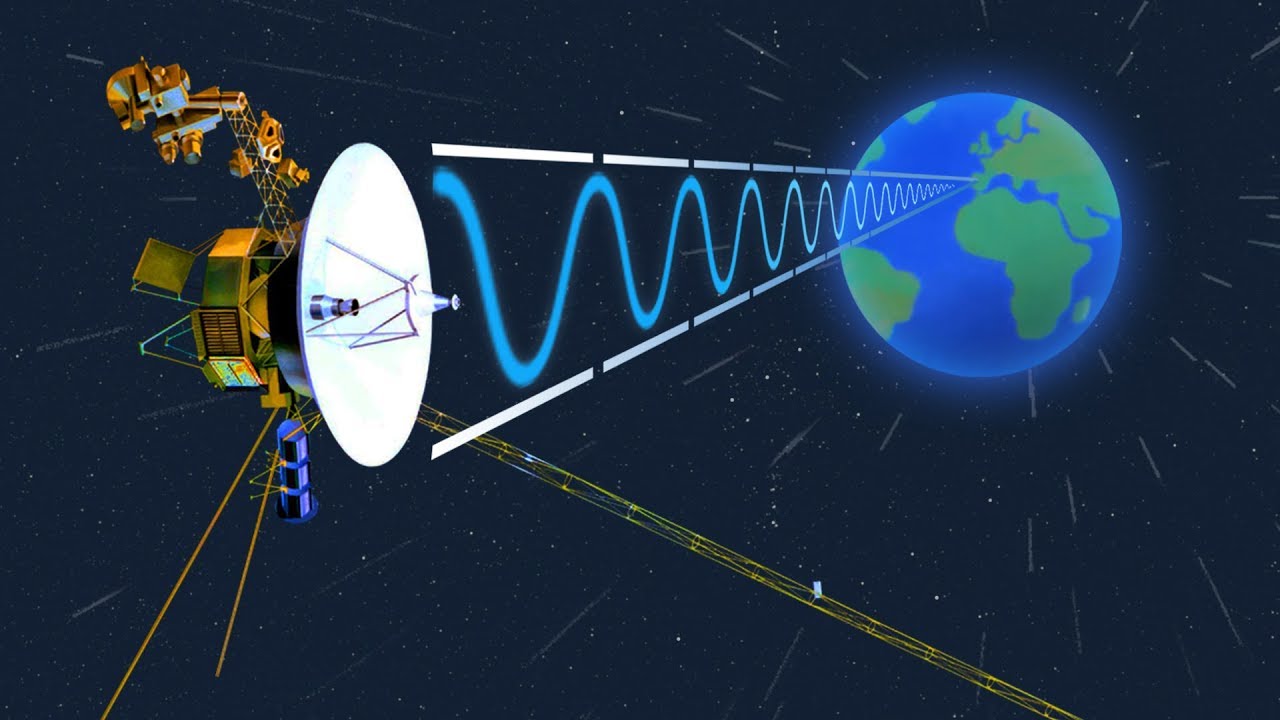
Somewhere out past the very edge of the Sun’s influence, moving silently through a cold, radiation-bathed darkness no human eye has ever directly seen, a forty-eight-year-old machine is still listening for us. Voyager 1 has long since crossed the heliopause—the invisible boundary where our star’s solar wind finally gives way to the interstellar medium. It is entirely alone in the void, a tiny metallic ambassador representing the ambitions of a world left far behind, enduring in an environment that is both immensely hostile and profoundly still.

Voyager 1 left Earth on September 5, 1977, riding a Titan-Centaur rocket on a mission originally built to last just four years. The objective was straightforward: leverage a rare planetary alignment that occurs only once every 176 years to visit Jupiter and Saturn, send back unprecedented pictures of their swirling storms and icy moons, and conclude the mission. Nobody signed up for what happened next. When the final planetary flyby ended, the spacecraft kept going. It has never stopped going since. Today, it sits roughly 25.9 billion kilometers away—about 170 times the distance from Earth to the Sun. By November 2026, it is expected to cross a strange, almost poetic threshold: exactly one light-day from home.

At this immense distance, a message leaving Earth takes a full 24 hours to arrive, and the faint reply won't reach our antennas until a day after that. Ask it "good morning" on a Monday, and the answer won't arrive until Wednesday. This staggering delay is a stark reminder of the sheer scale of the cosmos compared to our fragile human timeline. Remarkably, Voyager 1 reached this distant milestone by doing almost nothing at all—just coasting on the absolute laws of celestial mechanics. Since its final gravitational slingshot from Saturn in 1980, the probe hasn't fired a single main engine to change course. It simply drifts outward at about 38,000 miles an hour. With no brakes or final destination, it is aimed loosely toward the constellation Ophiuchus, sailing through a cosmic desert where it won't encounter another star system for tens of thousands of years. This silent, perpetual voyage is a testament to the elegant inertia of the universe, sharply contrasting our restless human nature with the quiet patience of deep space.

The Engineering Marvel: RTG Power

The conversation with it, meanwhile, keeps getting harder. Its radio still speaks, transmitting data at a sluggish 160 bits per second—slower than a 1990s dial-up modem. Every extra billion kilometers thins that signal further, stretching it across a widening silence before it is finally caught by the massive dish antennas of NASA's Deep Space Network.

The spacecraft's power is fading too, dictated by design and the undeniable laws of physics. Deep space is far too dim for solar panels, so to survive for nearly half a century in the freezing void, it relies on a Radioisotope Thermoelectric Generator (RTG):

  • The Heat Source: The generator contains pellets of Plutonium-238. As this radioactive isotope naturally decays, it emits a massive amount of heat.

  • The Seebeck Effect: The RTG uses a bi-metallic junction called a thermocouple. Exposing one side to the plutonium's heat and the other to the freezing void creates a severe temperature differential.

  • Solid-State Conversion: This gradient forces electrons to flow, converting heat directly into electrical voltage without moving mechanical parts.

Because Plutonium-238 has a half-life of 87.7 years, electrical output drops annually. Mission engineers on Earth spend their time quietly turning off heaters and non-essential instruments, performing long-distance triage to keep the core systems running. Eventually, likely into the late 2020s, it will only have enough power left to whisper, "I'm still here," before permanently severing its tether to humanity and becoming a completely silent wanderer.

The Internet Reacts: A Lonely Ambassador

The sheer scale of Voyager's journey triggers a unique mix of existential dread and humor online. These curated community comments perfectly capture this duality:

  • The Ultimate Ghosting: Hero commenter @hayosiko9119 jokes about the cosmic delay: "When the most distant man made object responds faster than your friends when you send them a message".

  • Projected Empathy: It is difficult not to anthropomorphize a machine alone for so long. @lawgx9819 asked, "How to feel sad for an object :(", while @travisworth9290 invoked the Mars Rover's final transmission: "“My batteries are low. It is getting dark.” 😭".

  • The Sci-Fi Plot Twist: Looking into the deep future, @PaintToSample imagined a terrifyingly funny scenario: "Imagine in 10 years, voyager is sent back by a mysterious source with an Uno Reverse card taped to it."

The Golden Record

And then there is the part of Voyager 1 that was never meant to be practical at all. Bolted securely to its side is the Golden Record. It contains greetings in 55 human languages, the sound of rain, wind, and whale song, ninety minutes of global music, and encoded photographs detailing who we are and where we came from.

To ensure this time capsule can be discovered and understood by an advanced civilization, Carl Sagan's committee included brilliant fail-safes:

  • Playback Hardware: Encased in protective aluminum to survive the vacuum, it comes with a cartridge, a playback needle, and etched symbolic instructions dictating a playback speed of 16-2/3 RPM.

  • Authentic Archives: All of this meticulously curated data remains publicly accessible for humanity via NASA's Science mission overview.

It is the ultimate message in a bottle cast into the vast cosmic ocean. It asked for nothing in return and expects no immediate reply. Instead, it simply carries the profound, hopeful offer of a fleeting civilization—destined to endure for billions of years as a monument to human curiosity, perfectly preserved in the vacuum, in case, someday, something out there is listening back.
Do you find this post helpful?

Comments:
Dragonborn vs The Sole Survivor: When Magic Clash With Technology

"This fight would’ve been quick if the Dragonborn was a stealth archer."

@whiterunguard56336y ago
8k

Dragonborn vs The Sole Survivor: When Magic Clash With Technology

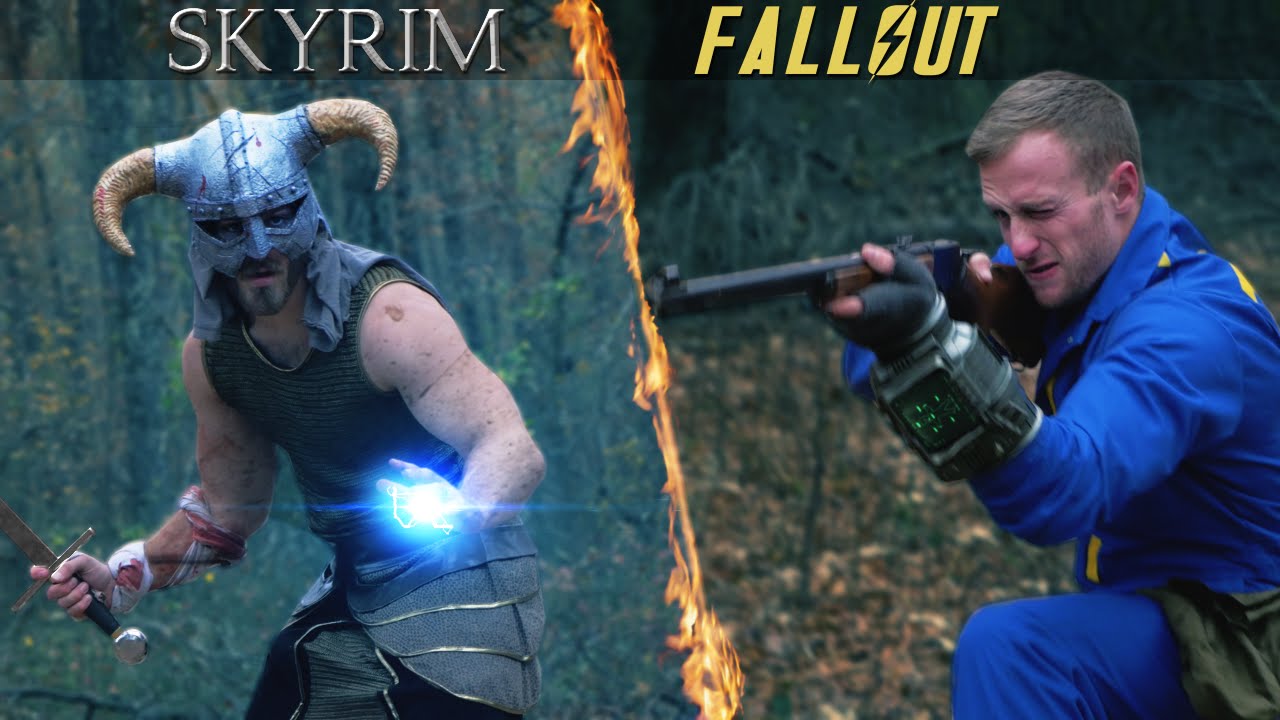
For over a decade, gaming forums have fiercely debated one hypothetical matchup: what happens when the mystical brute force of The Elder Scrolls collides with the retro-futuristic precision of Fallout? This fan-made, live-action crossover by Nukazooka finally stages that exact showdown, pitting the Dragonborn against the Sole Survivor in a brilliant clash of Bethesda's most iconic game mechanics.

Tale of the Tape: Mechanics & Survival

To truly appreciate the absurdity of this matchup, you have to look at the foundational mechanics that define how players actually survive in these respective wastelands.

Combatant

Setting

Signature Combat Mechanic

Desperation Healing Logic

Ultimate Offense

The Dragonborn

Skyrim (2011)

Real-time dual-wielding, stamina management, and magic scaling.

Pausing time to consume 40 wheels of cheese simultaneously.

The Thu'um (Fus Ro Dah)

The Sole Survivor

Fallout 4 (2015)

V.A.T.S. (Vault-Tec Assisted Targeting System) to manipulate time.

Injecting Stimpaks while eating heavily irradiated dog food.

Critical Hit Meter / Fat Man

The true brilliance of this video lies in how it visualizes this mechanical clash. V.A.T.S. is designed to turn frantic firefights into a calculated, statistical chess match driven by Action Points and hit percentages. Skyrim, conversely, relies on visceral, real-time dodging, shield bashing, and raw stat-checking. Watching a time-bending, pip-boy-wielding gunslinger try to calculate a headshot against a warrior who can literally shout the physical environment apart is a perfect encapsulation of Bethesda's dual design philosophies.

The Universal Laws of the Creation Engine

What makes this parody so successful isn't just the fight choreography; it is the absolute dedication to Bethesda's notoriously quirky game logic. The community immediately picked up on the shared DNA between the two franchises:

  • The Golden Rule: Top hero commenter @doomslayerishere9077 pointed out the most frustrating shared mechanic of both games, noting, "One thing they have in common: You can't fast travel when enemies are nearby".

  • The Panic Menu: Highlighting the most ridiculous combat trope in RPG history, @tessajalloh3914 added, "ha, the food bit got me. so very true. 'health is low, better eat EVERYTHING'."

  • Feature, Not a Bug: Viewers were also quick to notice the intentional visual stutters added to the edit, with @taczeslime8240 joking, "Damn it Bethesda even in the parodies there are glitches".

Hilariously Accurate Meta-Tactics

Beyond the engine itself, the video perfectly skewers how players actually behave when the combat gets tough, and the comments highlight the most enduring Skyrim lore:

  • The Inevitable Build: Hero commenter @whiterunguard5633 accurately diagnosed the Dragonborn's suboptimal loadout, stating, "This fight would've been quick if the Dragonborn was a stealth archer." This hits on the most famous meta-joke in Skyrim: no matter how a player intends to build their character—be it a spell-slinging mage or a two-handed berserker—they almost inevitably devolve into a stealth archer. Unlike destruction magic (which scales poorly at high levels) or melee (which requires absorbing heavy damage), stealth archery exploits the game's massive sneak attack damage multipliers and easily confused enemy AI, making it the most lethal, risk-free class in the game.

  • A Missed Guard Opportunity: Despite the brilliant execution of the video, @mathieuedde1465 spoke for the entire internet regarding the crossover's climax, asking, "Am I the only one who expected the arrow that he shot at dragonborn would land in his knee?" This references the ubiquitous piece of NPC dialogue uttered by nearly every city guard in Skyrim ("I used to be an adventurer like you, then I took an arrow in the knee"), which remains one of the most recognizable and enduring memes in gaming history.

Do you find this post helpful?

Comments:
The Accidental Legend of "Dimitri Finds Out"

"Never ask a woman her age, A man, his salary, And Dmitri which style of music is playing right now."

@kalinskivadim5y ago
29k

The Accidental Legend of "Dimitri Finds Out"

Long before it became one of the internet's most heavily recycled reaction templates, this legendary clip was just a random, forgotten bit of local news footage from Russia. Back in 2008, a local TV crew was shooting a standard segment at a nightclub called Compass in the city of Veliky Novgorod, asking club-goers what they thought of the music playing that night.

What they captured was an absolute masterclass in unintentional comedy. The core joke of the original video lies in its sheer irony: "Dimitri" is caught on camera bitterly complaining about how terrible and repetitive the club music is, only to instantly lose himself in euphoric, funky dance moves the very second a new—yet fundamentally identical—track begins to play. Anyone who truly appreciates classic electronic dance music knows exactly how a subtle shift in a bassline or a synth progression can instantly flip a track from disappointing to an absolute banger, and Dimitri’s sudden pivot captures that magic perfectly.

The Community Reacts: The Duality of Man

The internet has spent over a decade dissecting Dimitri's sudden shift from profound disappointment to pure rave euphoria. The community's curated comments perfectly capture why this video remains a masterpiece of digital culture:

  • The Unspoken Rule: Hero commenter @kalinskivadim laid down the ultimate confusion of Dimitri: "Never ask a woman her age, A man, his salary, And Dmitri which style of music is playing right now."

  • The Perpetual Cycle: Highlighting the sheer commitment to the rave, @KamiSamaisTriggered noted, "Legends say he visits that club every night just to get disappointed".

  • The Sudden Shift: @macblink perfectly summarized the chaotic energy of the video: "He complains about the music, and the next second he's dancing like it's the best party ever 😂".

  • The Lore and Aesthetic: @kostaftp elevated the man to a mythical status with, "Dimitri knows something the rest of us cannot even grasp," while @derfeuerwerker2177 pointed out the crucial visual atmosphere: "144p for true slav experience", highlighting the socio-economic difference between western Europe and eastern Europe in a humorous way.

The Anatomy of a Viral Format: The "Late Realization"

While the fake subtitles initially focused on random rants, the meme evolved into something much smarter. Today, the format is widely used to portray the agonizing feeling of a delayed realization—understanding something obvious, or finding an elegant solution way later than you should have.

The format perfectly mirrors the feeling of doing things the hard way before an easier path suddenly "drops." A brilliant example is the legendary academic edit of Dimitri struggling to solve differential equations, only to suddenly discover Laplace transformations. For anyone who has ever survived the brutal advanced math courses of an engineering or science degree, that sudden wave of relief when you realize you can just use the Laplace shortcut hits exactly as hard as Dimitri's beloved beat drop.

The Soundtracks

The transition from disgust to joy wouldn't work without a massive, atmospheric beat. When discussing the video's iconic, pulsating background soundtrack, hardcore trance and progressive house enthusiasts frequently point to heavy-hitting anthems like Sander Van Doorn's "Riff", Joonas Hahmo's "Sound of Sunday" and Alexander Popov feat. Syntigma's "Atlantida" It is the exact kind of high-energy, driving rhythm that commands a dancefloor, forcing even the most cynical club-goer to instantly start moving.

A Timeless MEME Template

In a digital landscape where memes die out in a matter of weeks, "Dimitri Finds Out" has achieved total immortality. It thrives because it captures a universally relatable human experience: the sheer, undeniable power of finally "getting it," whether that means understanding a complex math equation or just feeling the rhythm of a good song. Whether you are using it to mock a disastrous corporate announcement, lamenting a late realization, or just appreciating the vintage 144p nightclub aesthetic, Dimitri's passionate rant and subsequent dance moves remain one of the most versatile and beloved artifacts in internet history.

Do you find this post helpful?

Comments:
Niko Bellic Describes America in Grand Theft Auto IV

""Everything is just advertising with nothing to back it up" 2008 rockstar describes 2021 rockstar"

@MayYTlive4y ago
25.7k

Niko Bellic Describes America in Grand Theft Auto IV

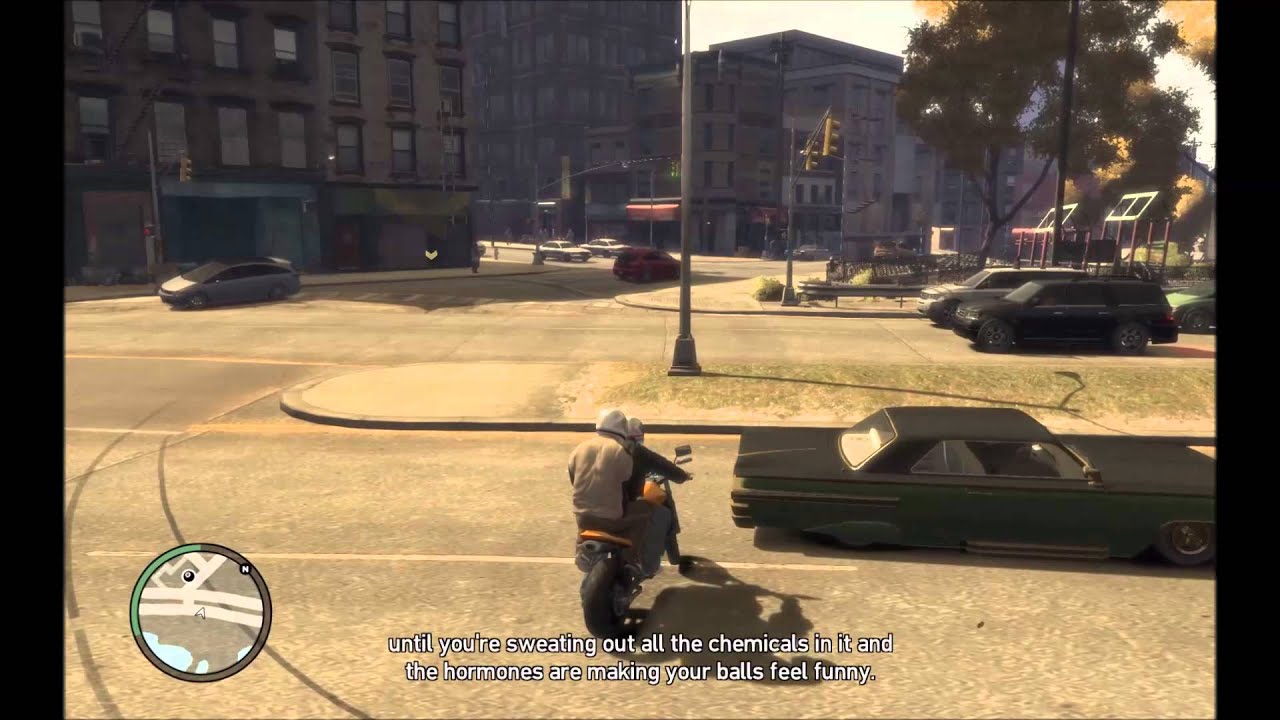
There’s a particular irony sitting at the heart of Grand Theft Auto IV. A game fundamentally built around theft, high-speed chases, and chaos ended up delivering one of the most quietly thoughtful pieces of writing the medium has ever seen.

You feel it most through Niko Bellic — an immigrant who arrives in Liberty City chasing a cousin’s exaggerated promises of easy money, only to find a world that runs on exactly the kind of hustling, lying, and disappointment he thought he had left behind. He isn't a blank cipher designed just to shoot things; he is tired, sardonic, and painfully self-aware.

What keeps resurfacing in fan discussions years later is Niko’s blunt dismantling of the "land of opportunity" myth. He delivers his critiques not as a preachy rant, but almost as an aside. He isn’t lecturing the player about capitalism; he’s simply a guy who came looking for a promise and found a hollow sales pitch instead. The game’s satire cuts in every direction—fake self-help gurus, empty reality-TV culture, and real estate scams—yet it’s all delivered with a wink, ensuring the cynicism never curdles into total bleakness.

How Players Remember Liberty City

Looking at how the community reacts to this dialogue today, it is clear that Niko's observations have taken on a prophetic quality. Fans consistently point out how the game's writing predicted not just society, but the trajectory of the gaming industry itself:

  • Predicting the Future of the Franchise: Top hero commenter @MayYTlive highlights the sheer meta-irony of Niko's line, "Everything is just advertising with nothing to back it up," adding the sharp observation that "2008 rockstar describes 2021 rockstar".

  • A Self-Fulfilling Satire: Echoing this exact sentiment, fellow hero commenter @rupel190 points out the stark contrast with the franchise's modern identity, noting, "It's beautiful how they made a parody of themselves looking at what GTA V has become." This is further backed by @vuvietanh7472, who observes, "It's ironic that everything Niko said is basically true in GTA V."

  • A Masterclass in Character Depth: Beyond the social commentary, user @michaellecis7849 praises the grounded portrayal of Niko himself, calling him "hands down the smartest character ever seen as a protagonist" and commending the developers for making him "a real human being with a lot of different shades in his personality".

  • The Franchise Peak: Summarizing the overarching sentiment of the fanbase, @undead9999 simply states, "GTA IV has probably the best writing in the series."

Ultimately, that underlying tension is exactly why comparisons to later entries keep surfacing. Where sequels leaned much harder into blockbuster spectacle and over-the-top action, GTA IV's story stayed rooted in something deeply uncomfortable and human. It remains a rare achievement for an open-world crime simulator to function as a genuine character study, proving that Liberty City's greatest asset wasn't its size, but its soul.

Do you find this post helpful?

Comments:
STALKER: Fallout for Men

"This is why I quick save every 5 seconds while playing STALKER"

@Consural9y ago
6.3k

STALKER: Fallout for Men

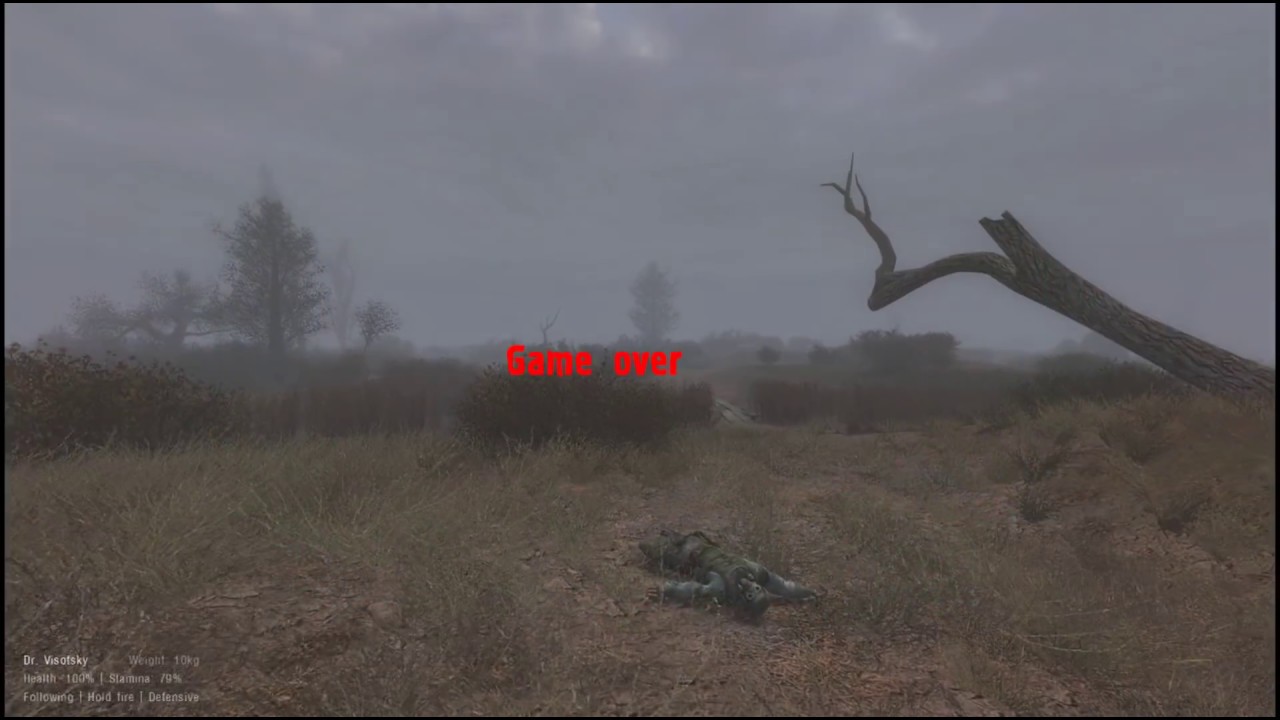
Welcome to the Zone, stalker. Developed by Ukrainian studio GSC Game World, the S.T.A.L.K.E.R. franchise isn't just a survival shooter; it's a rite of passage. Throwing players into a bleak, alternate-history Chernobyl Exclusion Zone, the series explores the aftermath of a mysterious second disaster. This cataclysm radically altered the landscape, giving rise to gravity-defying anomalies, terrifyingly mutated fauna, and physics-bending "artifacts." You step into the boots of a "stalker," a scavenger drawn to this highly radioactive wasteland to hunt for these priceless anomalies, knowing full well that every expedition could be your last.

The Franchise Timeline

To understand the legacy of the Zone, you have to look at its history. Here is how the seminal franchise has evolved over the years:

The A-Life System: An Indifferent Ecosystem

A defining trait that separates S.T.A.L.K.E.R. from conventional open-world RPGs—most notably Fallout—is its proprietary A-Life system.

Forget the hero-centric power fantasies where the world waits for the "Chosen One" to act. The Zone doesn't care about you. It operates entirely on an underlying, autonomous simulation. Factions engage in dynamic territorial disputes, bandits raid lonely outposts, and mutated wildlife follows a strict predatory hierarchy, all happening seamlessly whether you are there to witness it or not. You are merely another fragile entity trying to navigate a hostile, living ecosystem.

Brutal Combat & The Modding Legacy

This commitment to realism means the game ruthlessly eschews hand-holding, intrusive HUDs, and convenient fast-travel systems. Resources are severely limited, hunger and radiation are constant threats, and your trusty assault rifle will jam in the middle of a firefight.

  • Lethal AI: Enemy stalkers aren't just target practice. They will actively flank you, retreat when wounded, summon reinforcements, and land devastatingly precise shots during chaotic encounters.

  • Environmental Hazards: A single careless sprint into a hidden anomaly field can instantly end a dozens-of-hours-long playthrough.

  • Community Overhauls: This hardcore design philosophy fostered one of the most dedicated modding communities in PC gaming. Fans have engineered standalone masterworks like S.T.A.L.K.E.R. Anomaly, a free open-ended sandbox, and G.A.M.M.A., an overhaul that reworks the economy and artifact progression into the ultimate survival experience.

The Community Reacts: A "Heart Attack Simulator"

This unforgiving design is exactly why the fanbase is so deeply passionate. The sheer unpredictability and constant suspense of the game have traumatized and thrilled players in equal measure, perfectly reflected in the community's reactions:

  • The Paranoia: Hero commenter @Consural perfectly summed up the core gameplay loop, noting, "This is why I quick save every 5 seconds while playing STALKER".

  • The Reality Check: Emphasizing the game's brutal, uncompromising fairness, @post-apocalypticcomingsoon1625 stated, "The zone giveth and the zone taketh away."

  • The Wildlife: Reacting to the terrifying mutant encounters that define the series, @kjristian9618 claimed, "If something doesn't jump to your face then is not an STALKER game...", while @kabbablabba4073 simply dubbed the experience an "Australia Simulator".

The Enduring Allure of the Zone

In an era dominated by hand-holding tutorials, brightly lit objective markers, and heavily scripted set pieces, S.T.A.L.K.E.R. stands as a towering monument to emergent, uncompromising game design. It is a franchise built on tension, atmosphere, and the sheer dread of the unknown. With the massive, sustained success of its hardcore modding scene and the triumphant 2024 arrival of Heart of Chornobyl, GSC Game World has definitively proven that players are still hungry for virtual worlds that bite back. The Zone is just as terrifying, punishing, and remarkably beautiful as it was in 2007—and we wouldn't have it any other way.

Do you find this post helpful?

Comments: