When Gamers Realize RTX 5090's Reality

""The more GPU you buy, the shinier my jacket gets" -Uncle Jensen, Circa 2025"

@XtencoHS1y ago
48.1k

When Gamers Realize RTX 5090's Reality

The anticipation surrounding the RTX 50-series launch was nothing short of electric, but the aftermath has left the PC building community in a state of cynical disbelief. When Nvidia CEO Jensen Huang took the stage, the RTX 5090 was touted as a colossal leap forward that would supposedly double the performance of its predecessor. However, the internet is undefeated when it comes to reading the fine print.

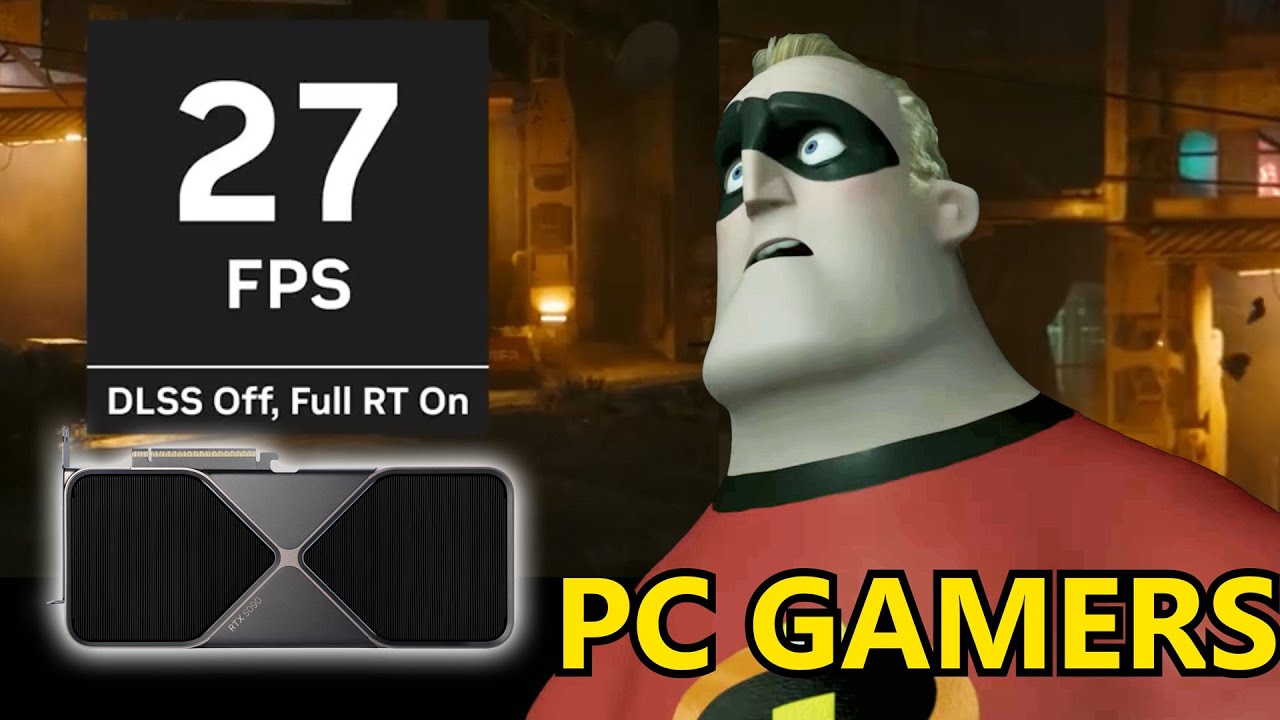
A viral meme perfectly captures the gaming community's collective realization that the marketing numbers aren't what they seem. Utilizing the iconic "Kronos database" scene from Pixar's The Incredibles —where a horrified Mr. Incredible discovers a grim truth on a glowing computer terminal—the edit brilliantly swaps out the movie's plot for Nvidia's actual benchmark disclosures. As Bob Parr stares at the monitor in despair, the reality sets in: the promised "generational leap" relies almost entirely on software illusion rather than raw silicon power.

The Generational Tax: 3090 vs. 4090 vs. 5090

To understand why the community is so frustrated by the screen's revelation, you have to look at the historical price-to-performance ratio. For years, PC builders accepted price hikes because they were accompanied by massive leaps in raw, brute-force hardware processing (rasterization).

With the 5090, that social contract has been severely fractured. The card demands a massive $400 price hike over the 4090, yet offers a highly diminishing return in actual hardware capability:

Graphics Card

Launch Year

Launch MSRP

Estimated Raw Hardware Uplift

Primary Marketing Driver

RTX 3090

2020

$1,499

Massive generational rasterization leap

DLSS 2 (Upscaling)

RTX 4090

2022

$1,599

~60-70% raw uplift over 3090

DLSS 3 (Frame Generation)

RTX 5090

2025

$1,999

~30% raw uplift over 4090

DLSS 4 ("Fake Frames")

Source data: Derived from Nvidia's official benchmark disclosures and historical MSRPs.

When stripped of DLSS 4 (Deep Learning Super Sampling) frame generation, the native performance uplift paints a sobering picture. Gamers are furious because they feel they are paying a $1,999 premium for a software algorithm rather than a true, foundational silicon upgrade.

The Optimization Crisis and the "Frames Generating Unit"

This over-reliance on artificial intelligence to generate frames—rather than pushing raw graphical horsepower—struck a serious nerve. Hero commenter @nathanmate8 perfectly renamed modern hardware architecture, declaring the new card a "Graphics Processing Unit ❌ Frames Generating Unit ✅".

The frustration extends far beyond Nvidia's pricing model; it highlights a massive, ongoing crisis within modern game development. Instead of writing efficient code, studios are relying on Nvidia's AI upscaling as a crutch to make poorly optimized games playable. @StephenRoseDuo simply pleaded, "Can we just start optimizing games again please?", a sentiment deeply expanded upon by @ignis2638: "We really have reached a point where our games are such unoptimized messes we need an AI to do the between frames. We really have messed up."

The Leather Jacket Paradigm

The meme closes with a pointed jab at Nvidia's marketing playbook, echoing Huang's infamous "the more you buy, the more you save" mantra. The community was quick to translate this corporate speak. Hero commenter @XtencoHS offered a highly accurate rewrite of the keynote: "The more GPU you buy, the shinier my jacket gets -Uncle Jensen, Circa 2025".

Ultimately, this strategy of using software tricks to dress up modest hardware gains has convinced veteran gamers to hold onto their legacy builds. As @christo3058 hilariously noted about their ancient, hard-working rig: "My watercooled GTX1080: 'Can I go now?' Not this year my friend, not this year..."

Do you find this post helpful?
Comments:
Dragonborn vs The Sole Survivor: When Magic Clash With Technology

"This fight would’ve been quick if the Dragonborn was a stealth archer."

@whiterunguard56336y ago
8k

Dragonborn vs The Sole Survivor: When Magic Clash With Technology

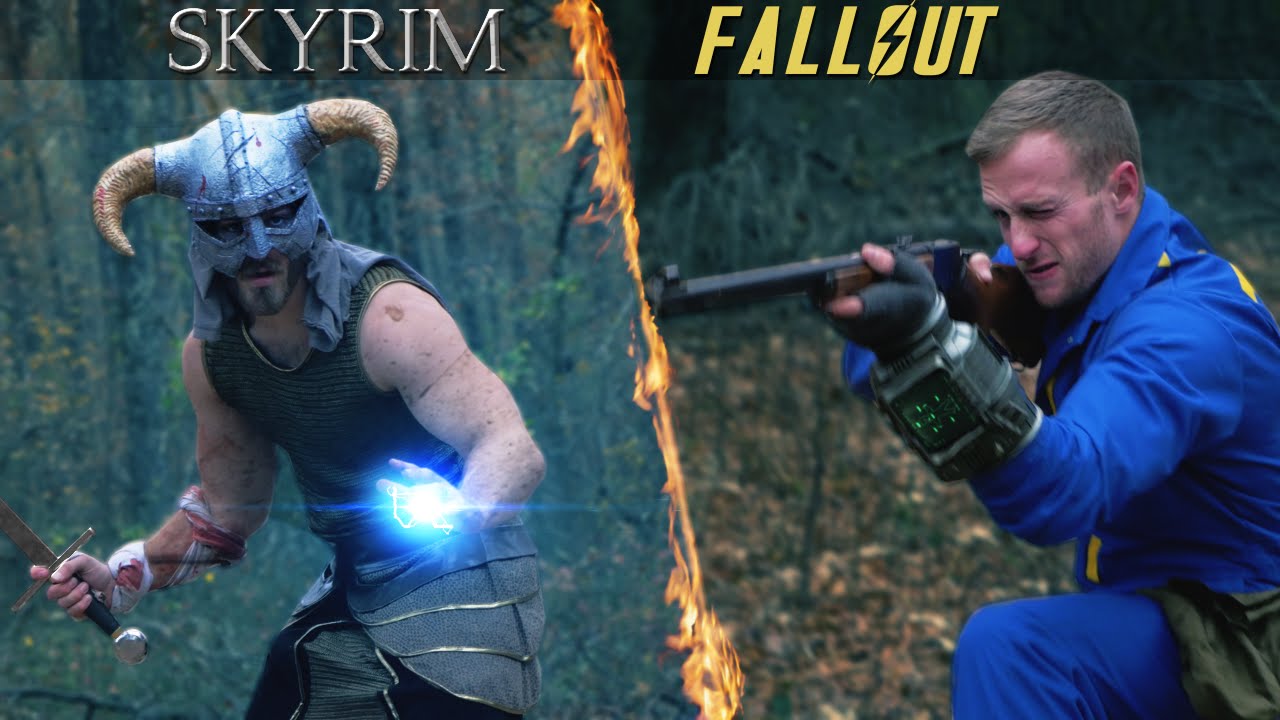
For over a decade, gaming forums have fiercely debated one hypothetical matchup: what happens when the mystical brute force of The Elder Scrolls collides with the retro-futuristic precision of Fallout? This fan-made, live-action crossover by Nukazooka finally stages that exact showdown, pitting the Dragonborn against the Sole Survivor in a brilliant clash of Bethesda's most iconic game mechanics.

Tale of the Tape: Mechanics & Survival

To truly appreciate the absurdity of this matchup, you have to look at the foundational mechanics that define how players actually survive in these respective wastelands.

Combatant

Setting

Signature Combat Mechanic

Desperation Healing Logic

Ultimate Offense

The Dragonborn

Skyrim (2011)

Real-time dual-wielding, stamina management, and magic scaling.

Pausing time to consume 40 wheels of cheese simultaneously.

The Thu'um (Fus Ro Dah)

The Sole Survivor

Fallout 4 (2015)

V.A.T.S. (Vault-Tec Assisted Targeting System) to manipulate time.

Injecting Stimpaks while eating heavily irradiated dog food.

Critical Hit Meter / Fat Man

The true brilliance of this video lies in how it visualizes this mechanical clash. V.A.T.S. is designed to turn frantic firefights into a calculated, statistical chess match driven by Action Points and hit percentages. Skyrim, conversely, relies on visceral, real-time dodging, shield bashing, and raw stat-checking. Watching a time-bending, pip-boy-wielding gunslinger try to calculate a headshot against a warrior who can literally shout the physical environment apart is a perfect encapsulation of Bethesda's dual design philosophies.

The Universal Laws of the Creation Engine

What makes this parody so successful isn't just the fight choreography; it is the absolute dedication to Bethesda's notoriously quirky game logic. The community immediately picked up on the shared DNA between the two franchises:

  • The Golden Rule: Top hero commenter @doomslayerishere9077 pointed out the most frustrating shared mechanic of both games, noting, "One thing they have in common: You can't fast travel when enemies are nearby".

  • The Panic Menu: Highlighting the most ridiculous combat trope in RPG history, @tessajalloh3914 added, "ha, the food bit got me. so very true. 'health is low, better eat EVERYTHING'."

  • Feature, Not a Bug: Viewers were also quick to notice the intentional visual stutters added to the edit, with @taczeslime8240 joking, "Damn it Bethesda even in the parodies there are glitches".

Hilariously Accurate Meta-Tactics

Beyond the engine itself, the video perfectly skewers how players actually behave when the combat gets tough, and the comments highlight the most enduring Skyrim lore:

  • The Inevitable Build: Hero commenter @whiterunguard5633 accurately diagnosed the Dragonborn's suboptimal loadout, stating, "This fight would've been quick if the Dragonborn was a stealth archer." This hits on the most famous meta-joke in Skyrim: no matter how a player intends to build their character—be it a spell-slinging mage or a two-handed berserker—they almost inevitably devolve into a stealth archer. Unlike destruction magic (which scales poorly at high levels) or melee (which requires absorbing heavy damage), stealth archery exploits the game's massive sneak attack damage multipliers and easily confused enemy AI, making it the most lethal, risk-free class in the game.

  • A Missed Guard Opportunity: Despite the brilliant execution of the video, @mathieuedde1465 spoke for the entire internet regarding the crossover's climax, asking, "Am I the only one who expected the arrow that he shot at dragonborn would land in his knee?" This references the ubiquitous piece of NPC dialogue uttered by nearly every city guard in Skyrim ("I used to be an adventurer like you, then I took an arrow in the knee"), which remains one of the most recognizable and enduring memes in gaming history.

Do you find this post helpful?

Comments:
The Chemistry of Disappointment: Jesse Pinkman Learns Science

"This is when Walter White became Heisenberg"

@willkirkpatrick65376y ago
70.2k

The Chemistry of Disappointment: Jesse Pinkman Learns Science

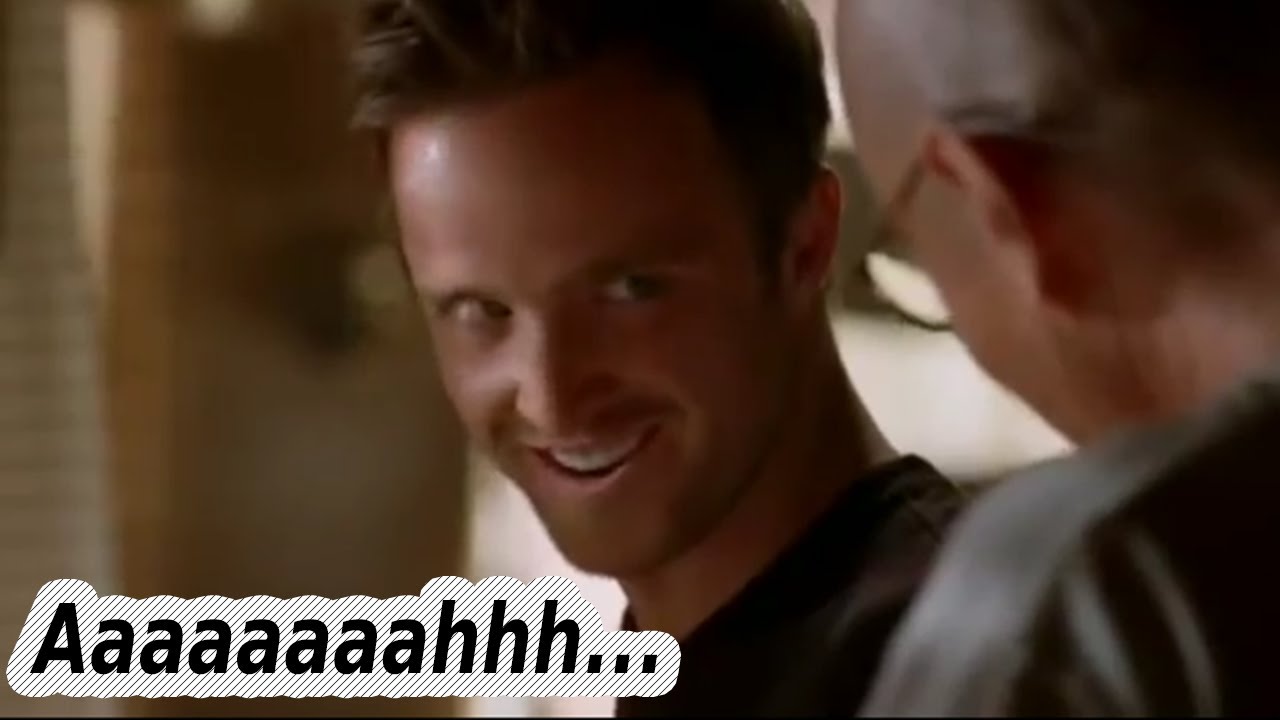
This scene from Breaking Bad’s legendary episode "4 Days Out"(Season 2, Episode 9) perfectly captures the comedic friction between Walter White's academic rigor and Jesse Pinkman's street-level literalism. Stranded in the desert with a dead RV battery, Walt constructs a makeshift galvanic cell using brake pads and coins, holding up a crucial component to test his former student's elemental knowledge. Jesse's slow, smugly confident delivery of "Aaaaahh... wire" is a masterclass in comedic timing, completely missing the chemical concept while accidentally nailing the exact practical application.

The Community Reacts: Elemental Confusion

The internet has enshrined this exact frame as the ultimate representation of confident stupidity. Filtering through the fandom, these curated comments perfectly deconstruct the tragicomedy of the duo's relationship:

  • The Breaking Point: Hero commenter @willkirkpatrick6537 brilliantly satirized the most overused show cliché: "This is when Walter White became Heisenberg". By applying a dramatic character-analysis trope to a moment of pure, exasperated face-palming, the joke hilariously frames Jesse's stupidity as the true catalyst for Walt's dark descent.

  • The Unearned Pride: Hero commenter @thewhatness analyzed the brilliant acting choice: "It's Jesse's brazen confidence in his answer that really sells this moment." Aaron Paul’s slow, satisfied nod proves that Jesse genuinely believes he has finally mastered the science, making the inevitable letdown significantly funnier.

  • The Alchemical Shift: Selected commenter @HoovyTube adapted the exact same dramatic trope for the materials: "This is the moment when copper became wire". It playfully suggests that Jesse's sheer conviction was strong enough to literally rewrite the laws of the periodic table.

  • The Periodic Error: Selected commenter @VazzyCow highlighted the core disconnect: "Ah yes, the element "wire"". It reduces the entire scene to its fundamental absurdity—Walt looking for a foundational building block of the universe, and Jesse naming a spool of hardware you buy at a hardware store.

  • The Tragic Mentor: Selected commenter @stuflu8380 pointed out the underlying emotional tragedy: "Man, Walt wants so badly to be proud of Jesse." Beneath the comedy lies a sad truth: Walt desperately wants an intellectual peer, and Jesse desperately wants a father figure's approval, yet they fundamentally speak different languages.

The Science of "Wire"

The profound irony of the joke is that Jesse’s answer relies on flawless underlying physics. Walt is looking for the answer "copper", a transition metal defined by its atomic number 29 and its highly unique electron configuration: $[Ar] 3d^{10} 4s^1$.

That single $4s^1$ valence electron is extremely loosely bound to the atom's nucleus. When solid copper forms a metallic crystal lattice, these outermost electrons detach and form a highly mobile "electron sea." Because they face minimal atomic resistance, applying even a tiny voltage causes these electrons to drift rapidly toward the positive terminal, creating an incredibly efficient electric current.

This precise subatomic architecture is exactly why copper remains the foundational element for global electronics—scaling seamlessly from the heavy-duty automotive wiring failing in their RV, down to the intricate logic boards powering modern microcontrollers, RF communication transmitters, and automated sensor arrays. While silver possesses a marginally lower electrical resistance, copper strikes the perfect commercial balance of extreme ductility, high conductivity, and thermal stability. Jesse was entirely blind to the complex chemical theory, but his practical science logic was completely undeniable.

Do you find this post helpful?

Comments: