"The 3 am motivation rush makes sense now"
The Night Life of Ancient Humans: The Evolution Around Campfire
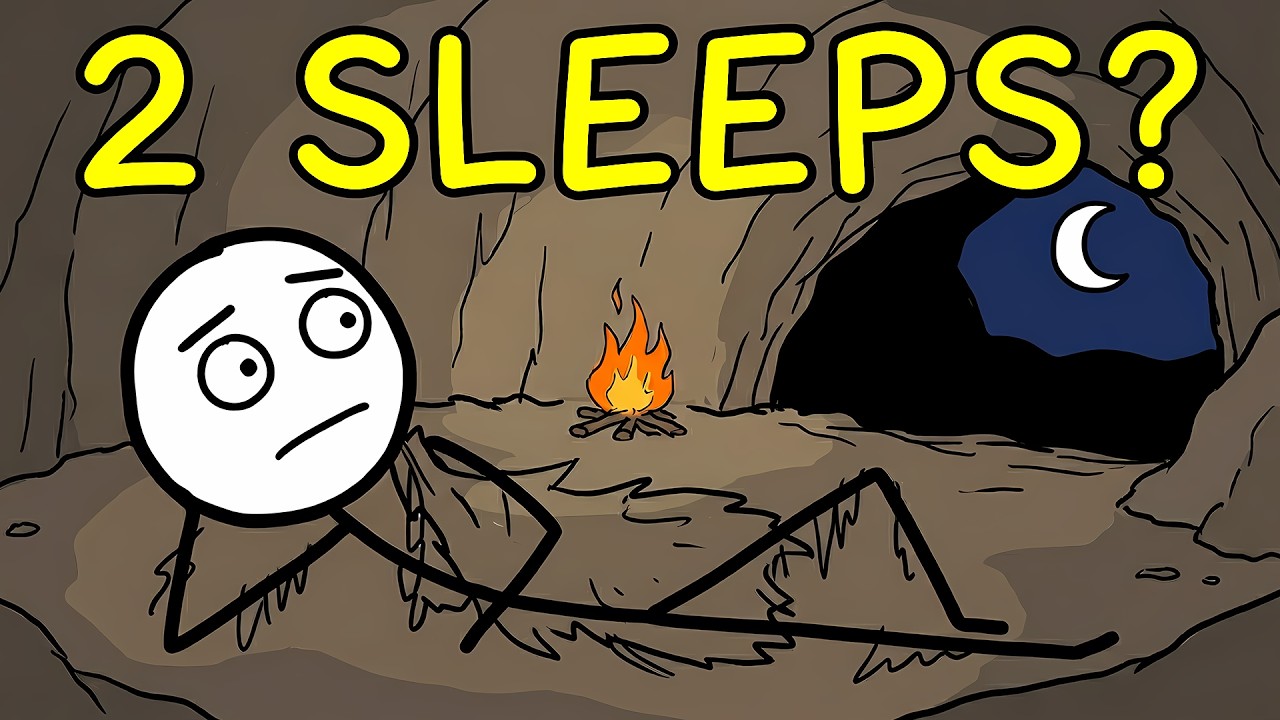
Imagine a night entirely devoid of electricity, television, smartphones, or the constant hum of the internet. For the vast majority of human history, the setting sun didn't mean relaxing with screen time; it signaled a hard biological stop. Night was a realm ruled by absolute darkness and apex predators. Before mastering fire, our ancestors were essentially prey, forced to cluster blindly in caves or trees.
The controlled use of fire fundamentally rewired this experience. It didn't just provide warmth and a shield against nocturnal threats; it offered the first artificial light.
Unearthed Hearths: The Archaeological Record
While early hominin interactions with fire may trace back 1.5 million years, undeniable archaeological evidence of its deliberate control provides a fascinating window into ancient nightlife. At the Wonderwerk Cave in South Africa, archaeologists discovered charred plant remains and burnt bones dating back roughly 1 million years, alongside grass and leaves intentionally used to feed the flames. Similarly, the Swartkrans Cave in South Africa yielded around 270 burnt bones heated to temperatures consistent with experimental campfires.
By 400,000 to 300,000 years ago, habitual fire use became a systematic practice, as evidenced by the well-preserved deposits at Israel's Qesem Cave. As human cognition evolved, so did their tools for conquering the dark; archaeologists have even recovered Paleolithic stone lamps from around Lascaux, France, dating back 17,500 years, which burned wicks made of plant material and animal fat to illuminate the night.
The Original Social Network
This glowing epicenter pushed back the dark and lengthened the day, creating unprecedented hours for activities beyond mere survival. The hearth became our original social network. Anthropological studies of the Ju/'hoansi Bushmen in the Kalahari Desert reveal a striking behavioral shift that likely mirrors our ancestors: while daytime conversations are overwhelmingly practical and work-related, over 80% of nighttime exchanges around the fire are devoted to storytelling, singing, and spirituality. Long before digital entertainment existed, the crackling fire provided the focal point that forged the foundations of culture, language, and shared human identity.
The Community Reacts: Biology vs. Modernity
Learning about the fragmented, social nature of ancient human sleep schedules reveals a stark contrast with modern living. The curated comments perfectly highlight the profound disconnect between our ancient biological hardwiring and the demands of contemporary society:
The Midnight Oil: Connecting our modern late-night bursts of energy to our ancestors' nocturnal habits, Hero commenter @JoshiGaming-m8j noted, "The 3 am motivation rush makes sense now".
The Modern Illusion: Taking a philosophical view of this biological mismatch, Hero commenter @HealthyJourneyDaily bluntly stated, "This makes modern life look less like progress and more like damage control".
The Industrial Friction: Expanding on that clash of eras, Best commenter @fallen6060 wrote, "Its crazy cus the more you study history and how the body biologically works, the more you see how we build a society/world that breaks our own rules as a species for industrialsation and work".
The Primal Instincts: Applying this ancient history to modern parenting, Best commenter @cervindon pointed out a brilliant observation about infant behavior: "Then we get mad at babies for crying in the night, when they just are doing their basic instincts and wonder why noone is awake with them".
The Practical Solution: Finally, Best commenter @akshonclip shared a simple, practical way to mimic the ancient hearth and hack our biology for better rest: "We started dimming our lights after dinner. It made a huge difference in the quality of sleep we get".
Echoes of the campfire
The night life of ancient humans was far from dormant. Instead of simply shutting down when the sun set, our ancestors used the cover of darkness and the safety of the campfire to cultivate the very traits that make us uniquely human. Today, we may have replaced campfires with glowing screens and stone lamps with LED bulbs, but our biological programming remains inextricably tied to those ancient, firelit nights. Recognizing this evolutionary history doesn't just explain our 3 AM bursts of creativity; it offers a profound reminder that human connection has always thrived in the spaces where we push back the dark.
Do you find this post helpful?