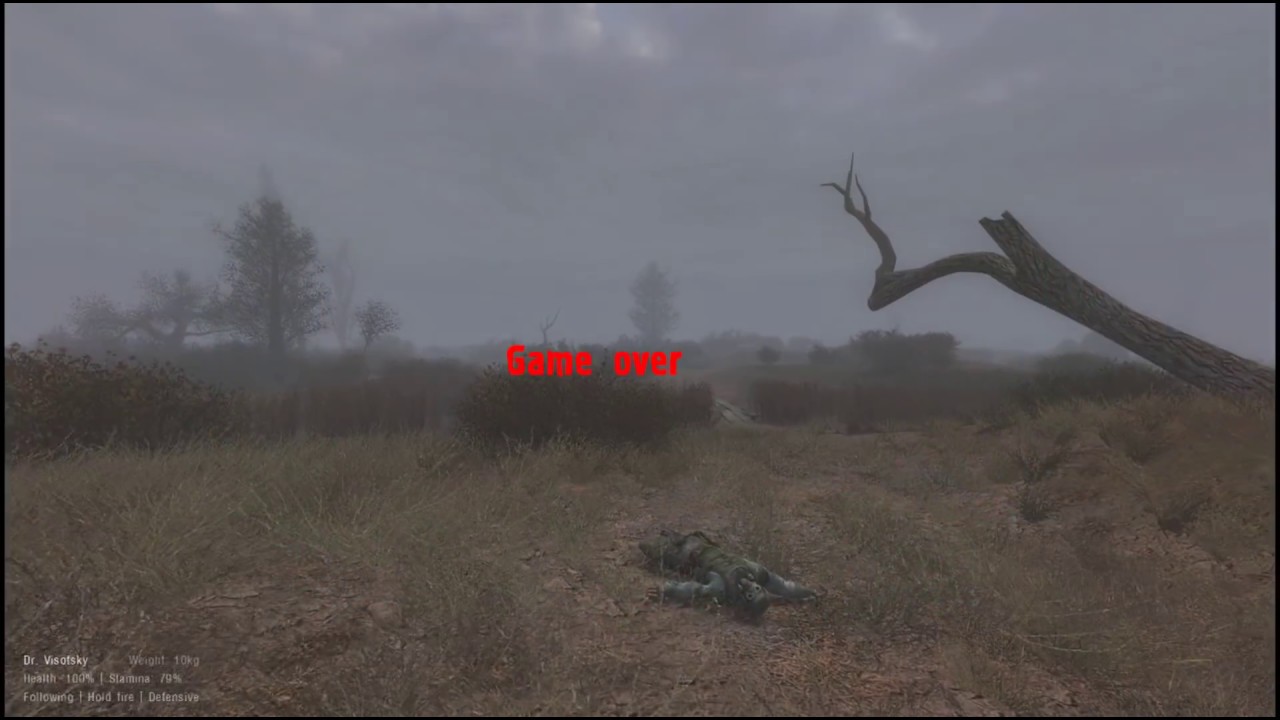
"This is why I quick save every 5 seconds while playing STALKER"
STALKER: Fallout for Men
Welcome to the Zone, stalker. Developed by Ukrainian studio GSC Game World, the S.T.A.L.K.E.R. franchise isn't just a survival shooter; it's a rite of passage. Throwing players into a bleak, alternate-history Chernobyl Exclusion Zone, the series explores the aftermath of a mysterious second disaster. This cataclysm radically altered the landscape, giving rise to gravity-defying anomalies, terrifyingly mutated fauna, and physics-bending "artifacts." You step into the boots of a "stalker," a scavenger drawn to this highly radioactive wasteland to hunt for these priceless anomalies, knowing full well that every expedition could be your last.
The Franchise Timeline
To understand the legacy of the Zone, you have to look at its history. Here is how the seminal franchise has evolved over the years:
The A-Life System: An Indifferent Ecosystem
A defining trait that separates S.T.A.L.K.E.R. from conventional open-world RPGs—most notably Fallout—is its proprietary A-Life system.
Forget the hero-centric power fantasies where the world waits for the "Chosen One" to act. The Zone doesn't care about you. It operates entirely on an underlying, autonomous simulation. Factions engage in dynamic territorial disputes, bandits raid lonely outposts, and mutated wildlife follows a strict predatory hierarchy, all happening seamlessly whether you are there to witness it or not. You are merely another fragile entity trying to navigate a hostile, living ecosystem.
Brutal Combat & The Modding Legacy
This commitment to realism means the game ruthlessly eschews hand-holding, intrusive HUDs, and convenient fast-travel systems. Resources are severely limited, hunger and radiation are constant threats, and your trusty assault rifle will jam in the middle of a firefight.
Lethal AI: Enemy stalkers aren't just target practice. They will actively flank you, retreat when wounded, summon reinforcements, and land devastatingly precise shots during chaotic encounters.
Environmental Hazards: A single careless sprint into a hidden anomaly field can instantly end a dozens-of-hours-long playthrough.
Community Overhauls: This hardcore design philosophy fostered one of the most dedicated modding communities in PC gaming. Fans have engineered standalone masterworks like S.T.A.L.K.E.R. Anomaly, a free open-ended sandbox, and G.A.M.M.A., an overhaul that reworks the economy and artifact progression into the ultimate survival experience.
The Community Reacts: A "Heart Attack Simulator"
This unforgiving design is exactly why the fanbase is so deeply passionate. The sheer unpredictability and constant suspense of the game have traumatized and thrilled players in equal measure, perfectly reflected in the community's reactions:
The Paranoia: Hero commenter @Consural perfectly summed up the core gameplay loop, noting, "This is why I quick save every 5 seconds while playing STALKER".
The Reality Check: Emphasizing the game's brutal, uncompromising fairness, @post-apocalypticcomingsoon1625 stated, "The zone giveth and the zone taketh away."
The Wildlife: Reacting to the terrifying mutant encounters that define the series, @kjristian9618 claimed, "If something doesn't jump to your face then is not an STALKER game...", while @kabbablabba4073 simply dubbed the experience an "Australia Simulator".
The Enduring Allure of the Zone
In an era dominated by hand-holding tutorials, brightly lit objective markers, and heavily scripted set pieces, S.T.A.L.K.E.R. stands as a towering monument to emergent, uncompromising game design. It is a franchise built on tension, atmosphere, and the sheer dread of the unknown. With the massive, sustained success of its hardcore modding scene and the triumphant 2024 arrival of Heart of Chornobyl, GSC Game World has definitively proven that players are still hungry for virtual worlds that bite back. The Zone is just as terrifying, punishing, and remarkably beautiful as it was in 2007—and we wouldn't have it any other way.
Do you find this post helpful?